

Why the world’s most digital brands still send things in the post
In luxury and automotive, physical communication is doing something digital can't. A look at why the printed piece survives, and what separates the work that earns its cost from the work that just spends it.
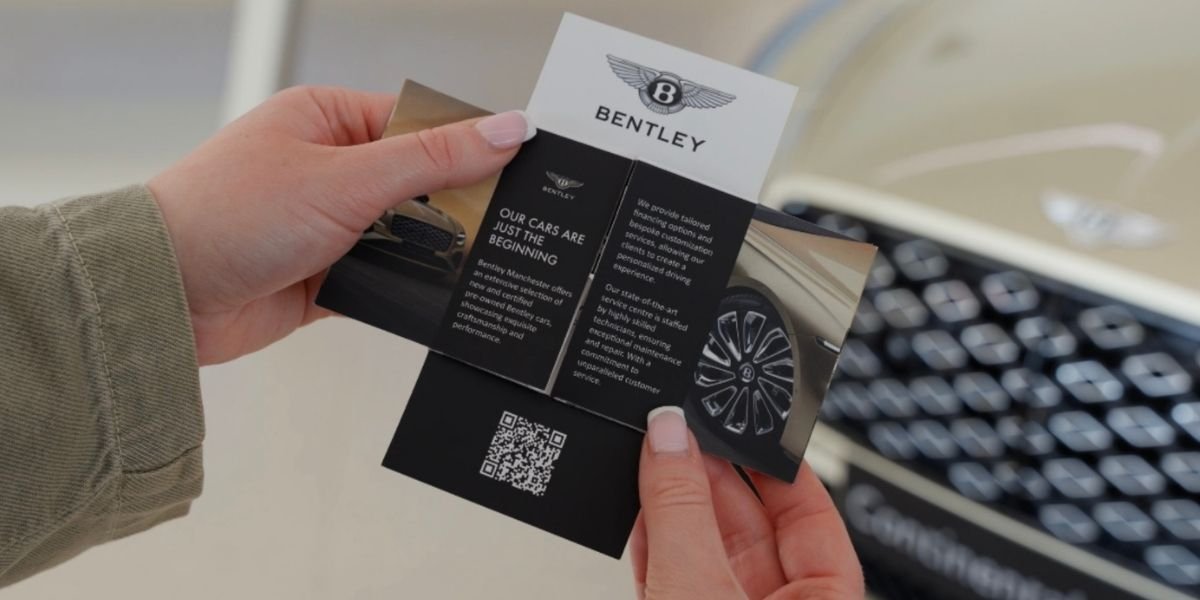
Every year someone declares print dead. Every year, the brands with the largest digital budgets in the world keep commissioning it. Bentley, Porsche, Rolex, Tudor (organisations with sophisticated CRM stacks and no shortage of digital reach) still put physical objects into the hands of their customers. Not out of nostalgia. Because it works, and because it does a specific job that a well-targeted email cannot.
Twenty years ago, direct mail was the cheap channel and digital attention was scarce. That’s inverted.
An email costs almost nothing to send, which is precisely why the average inbox is unmanageable and open rates keep drifting downwards. Meanwhile the letterbox has emptied out. A considered physical piece now arrives in a near-empty channel, and its cost is legible to the recipient, they can feel that someone spent money on them.
For a brand whose entire proposition rests on craft and materials, that’s not a media buy. It’s a demonstration.
What separates the good from the expensive?
A reason to exist. The strongest work is tied to a genuine moment: a model launch, a first service, a collection, an ownership anniversary.
Restraint. One well-chosen material decision outperforms five. An uncoated stock with real weight and a single blind emboss will beat a piece carrying foil, spot UV, a gatefold and a die-cut, all competing.
Engineering, not just decoration. The format itself can carry the idea: how it opens, what’s revealed, the order in which things happen. This is where print stops being a flat surface and starts being an experience, and it’s the thinking behind our own interloopmailer®.
A digital destination that matches. The most common failure in the category is a beautifully made object driving traffic to a landing page that looks nothing like it. The handover between physical and digital is where the illusion usually breaks.
The debate was never print versus digital. It’s whether each touchpoint is doing something the others can’t. A brand built on materials and craft has an obvious advantage in physical media and should use it. What it can’t afford is a physical experience that feels like the brand and a digital experience that feels like a template.
Planning a launch or customer programme? Get in touch.
More information
Related articles
Refresh or rebrand? How to tell which one your Brand needs
"Do we need a rebrand?" comes up in a lot of first conversations. A brand that feels tired is easy to spot. Working out why it feels tired is harder. Sometimes the logo, colours and typography have simply aged; sometimes the business underneath them has changed so much that no amount of polish will make the identity fit again.

15 Years In: GSD Recertifies to ISO 14001
For the 15th year running, Graham Shapiro Design (GSD) has recertified to ISO 14001 - the international standard for environmental management.

Everyone’s using AI. Almost nobody’s setting the ground rules.
Ask five people at your company which AI tool they use, and you might get five different answers. That's not a small thing. AI has quietly become business infrastructure, and it deserves the same ground rules as anything else the business relies on daily.
AI at GSD®
GSD® now offers AI as a service: brand, content and product work built on AI, with human creative direction and sign-off on everything that ships.